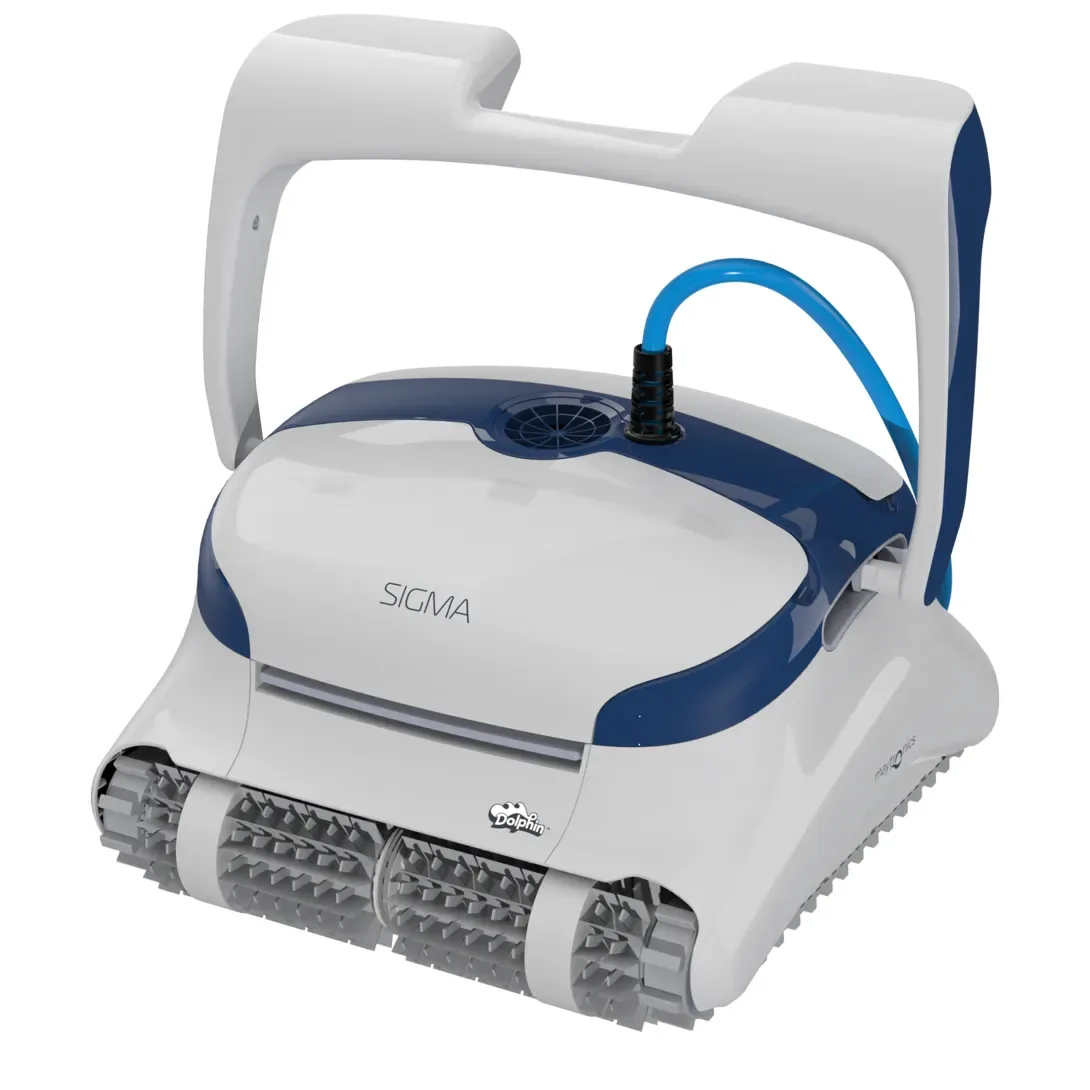
Dolphin~$2,999
Dolphin Sigma
Corded waterline · 150 min cycle
- Pool fit
- No cable length published
- Filtration
- No micron figure published
- Retrieval
- You fish out 24.6 lb
- 3-year warranty
- App control
- $2,999
Cleans: Floor, walls, waterline
Short answer
There is no single number, because what ends a robot's life is usually one part: a pump motor seal, a power supply, a battery, or a cable that has twisted beyond use. Brushes and drive belts wear out on a schedule and are cheap to replace. The warranty is the only lifespan figure a maker commits to, and here it runs from one year to three; 4 robots publish no term at all.
Brushes and drive belts or tracks are consumables. They wear faster on rough plaster and pebble finishes than on vinyl or tile, and a robot with worn brushes slips on walls and stops climbing. Filters and baskets tear eventually. None of these ends a robot; all of them are why it helps to buy one whose maker sells parts.
On corded robots the cable and swivel wear next. A swivel that stops turning lets the cable twist until it knots, shortening the robot's reach until it can no longer reach the far end of the pool. A new cable is a common repair.
The pump motor and its seals are the heart of any robot, and a seal that lets water into the motor housing is usually terminal. On corded robots the deck power supply is the other common failure, and it is replaceable. On cordless robots the battery is the part with a known lifespan: every lithium cell loses capacity with charge cycles and heat, and a robot whose battery is sealed in is only as long-lived as that battery.
Two habits extend all of it: take the robot out of the water after each cycle, and store it in shade. A robot parked on the main drain for a week and one baked on the deck all summer are both ageing faster than one hung in a caddy.
Warranty terms here: 14 robots at 1 year, 23 robots at 2 years, 11 robots at 3 years. Warranties differ in what they cover as well as for how long — Hayward's TigerShark QC, for example, covers parts for a year and labour not at all.
Dividing price by warranty years gives a floor on what each covered swim season costs: from $170 a year for the WYBOT A1 to $1,599 for the Dolphin Nautilus Titan. It is not a lifespan, and it is not a prediction; it is how much of the price the maker stands behind.
Corded waterline · 150 min cycle
Cleans: Floor, walls, waterline
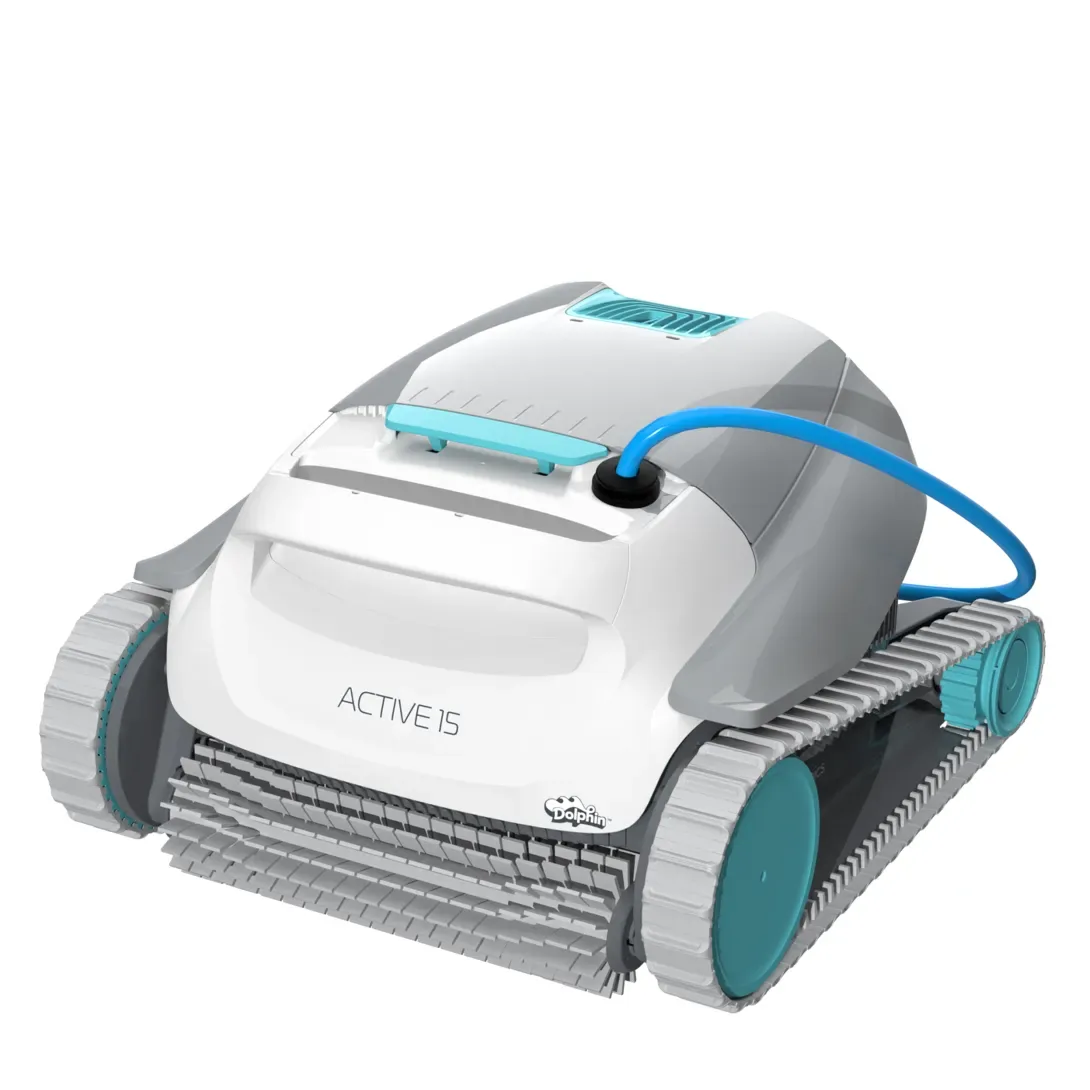
Corded floor+wall · 120 min cycle
Cleans: Floor, walls
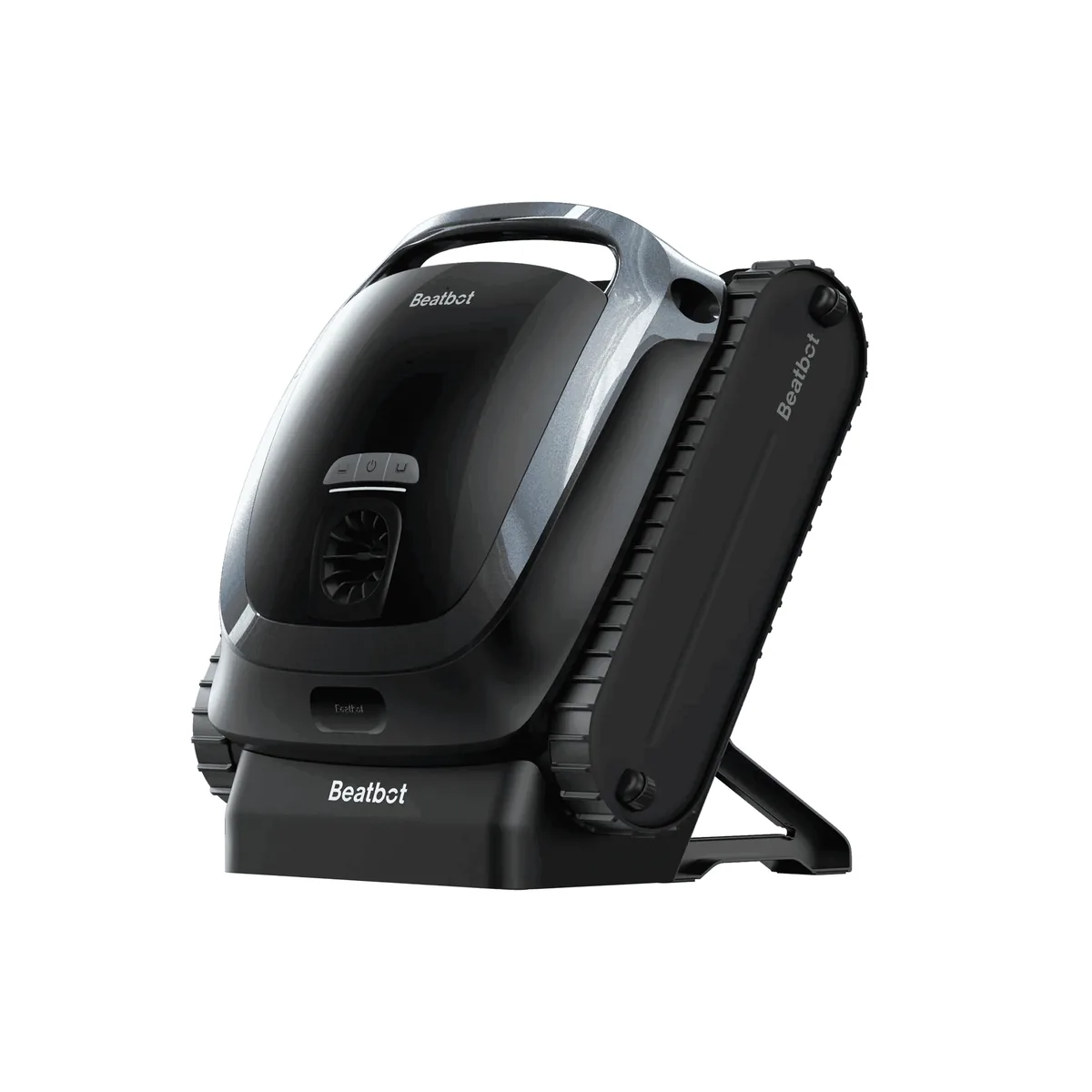
Cordless floor+wall+waterline · 240 min, floor only
Cleans: Floor, walls, waterline
Corded if the pool is large or you want the robot to run on a schedule for years without a battery to replace; cordless if the cable is the thing you hate. A corded robot never runs out mid-cycle and has no battery to wear out, but its cable twists over time. A cordless one has no cable to tangle, but its runtime is the hard limit on what it can clean, and its battery loses capacity every season.
Yes. A salt pool runs at roughly a tenth of seawater's salinity, and robotic cleaners are built to work in it. What salt is hard on is anything metal and anything left wet: swivel bearings, fasteners and battery charging contacts. Take the robot out between cycles, rinse it in fresh water now and then, and store it out of direct sun.
Every specification explained, with the numbers from the catalog behind each one.