What a Pool Robot's Micron Rating Means

Short answer

The micron rating is the smallest particle the robot's filter is rated to catch. Leaves and bugs are caught by anything; sand needs roughly 200 µm or finer; pollen and silt sit around 10–100 µm; the fine dust and early algae that cloud water are under 50 µm. Of the 24 robots here whose maker publishes a figure, the median is 150 µm — sand and grit, not dust. 28 publish none.

What each size catches

A micron is a thousandth of a millimetre; a human hair is somewhere around 70 microns across. Filter ratings describe the smallest particle the mesh or cartridge is designed to hold back, and the bands on this site follow what pool debris actually measures.

Finest filterWhat it catchesRobots here
50 µm or finerFine dust, silt and early algae5
51–149 µmPollen and silt, not the finest dust1
150–250 µmSand, grit and leaves16
Coarser than 250 µmLeaves and bugs only2

Why finer is not automatically better

A finer filter clogs faster. As it fills, suction drops, and a robot with a clogged ultra-fine layer cleans worse than one with a clean coarse basket. That is why the robots with 3 or 10 µm layers ship them as a second stage behind a coarse basket, and why their makers suggest running the coarse basket alone after a storm or in spring, when there is a lot of large debris.

The finest filter in the catalog is the Aiper Scuba S1 Pro at 3 µm. Several robots here offer an ultra-fine basket as an optional extra; this site counts only what is in the box, because that is what the price buys.

When it matters

If the water is clear and the floor collects leaves, sand and bugs, a 150–180 µm basket does the job and stays unclogged longer. If the pool clouds after rain, collects pollen in spring, or has a fine-dust problem the sand filter lets back in, a sub-50 µm layer is worth having — and rinsing after every run.

Robots this comes up with

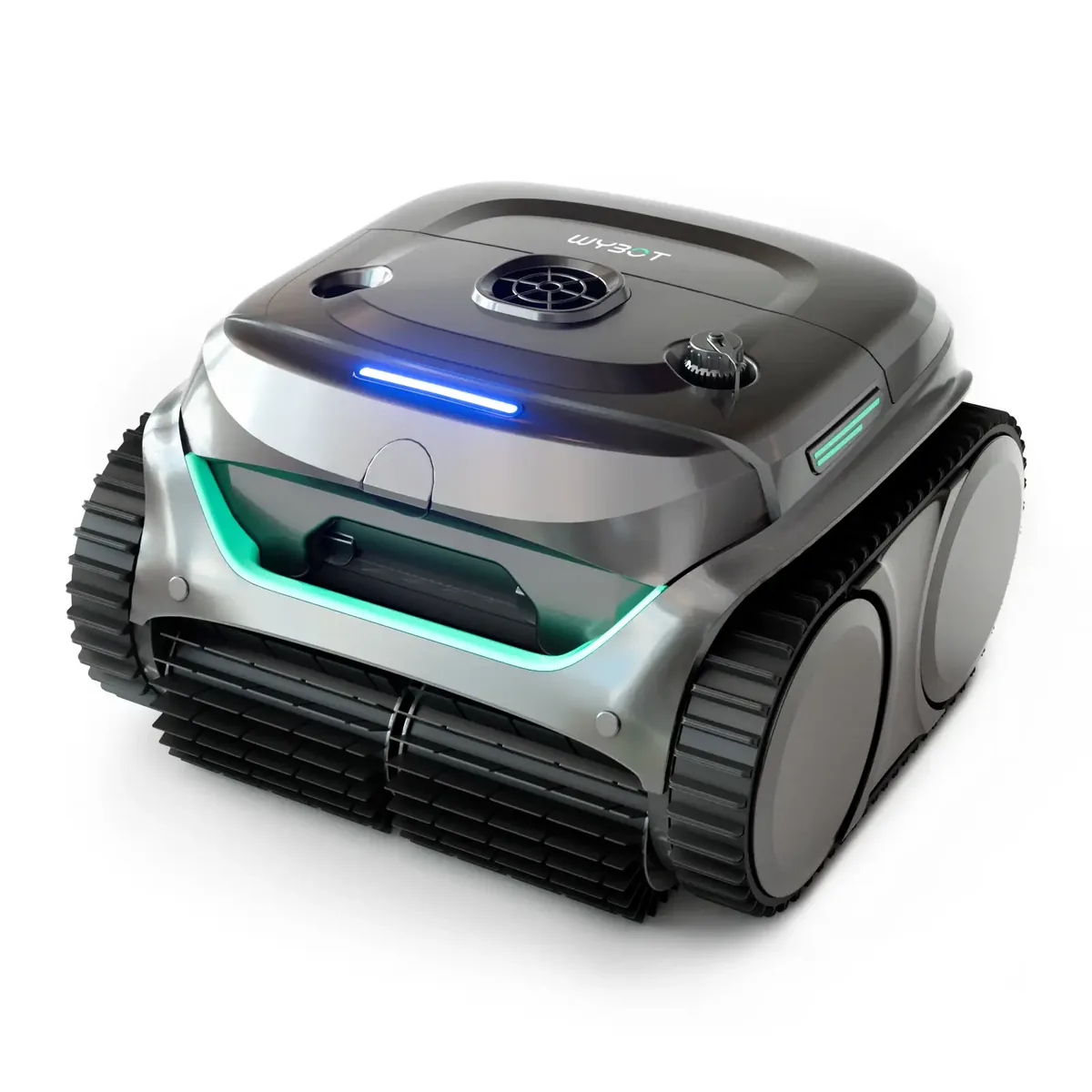
WYBOT C2 robotic pool cleaner
WYBOT~$500

WYBOT C2

Cordless floor+wall+waterline · 180 min, floor only

Pool fit
~68 ft (floor only)
Filtration
10 µm · fine dust and algae
Retrieval
Parks for pickup · 17.6 lb
  • 10 µm filter
  • 17.6 lb
  • $500

Cleans: Floor, walls, waterline

Related

  • How Long Do Pool Robots Last, and What Fails First?

    There is no single number, because what ends a robot's life is usually one part: a pump motor seal, a power supply, a battery, or a cable that has twisted beyond use. Brushes and drive belts wear out on a schedule and are cheap to replace. The warranty is the only lifespan figure a maker commits to, and here it runs from one year to three; 4 robots publish no term at all.

  • Do Pool Robots Clean the Waterline?

    Some do: 38 of the 52 robots here list waterline cleaning. But a robot that "climbs walls" does not necessarily scrub the waterline — it may turn back a few inches below it. Look for a waterline mode or waterline scrubbing by name, and for a horizontal pass along the tile line rather than a vertical climb to it.

  • Reading a pool robot spec sheet

    Every specification explained, with the numbers from the catalog behind each one.