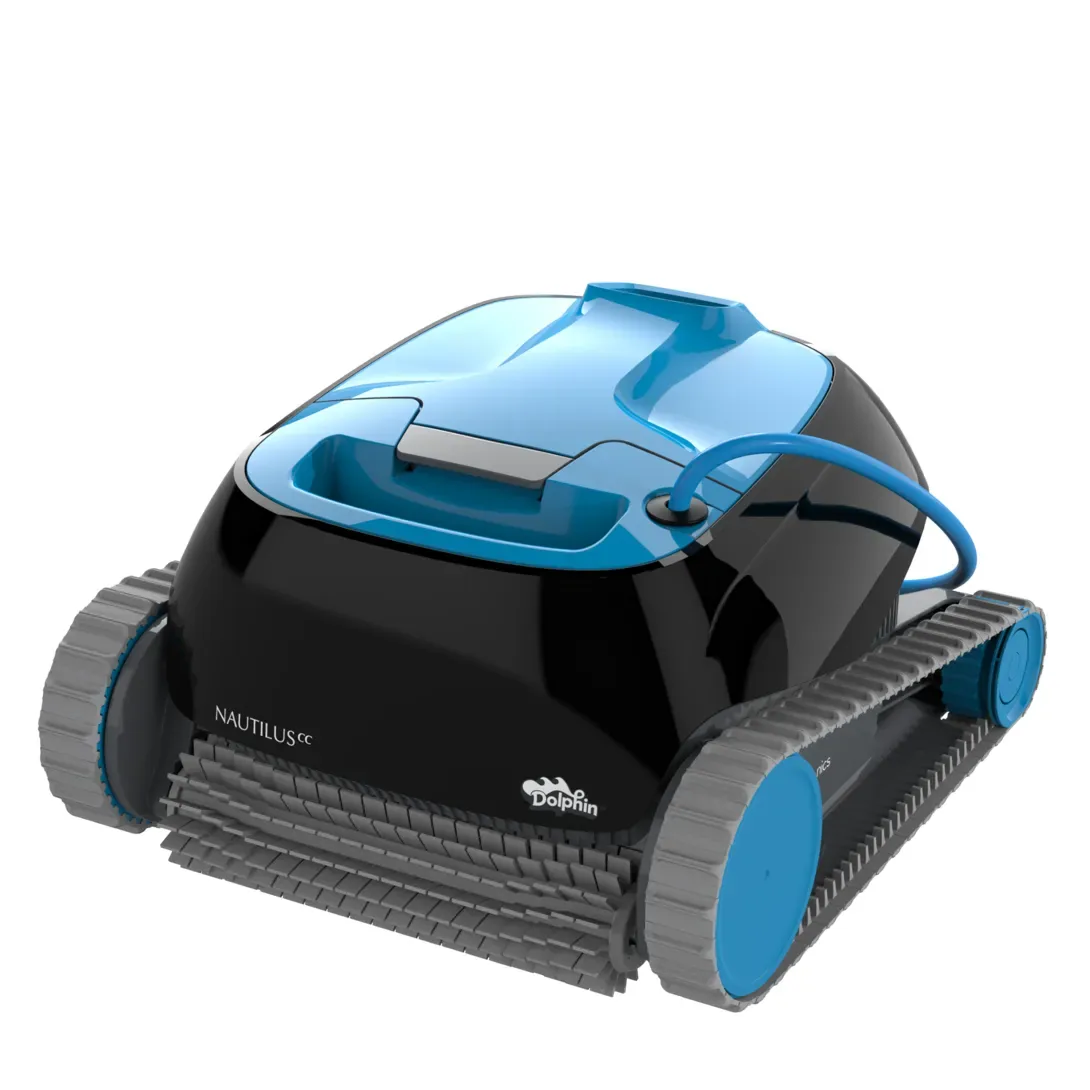
Dolphin~$649
Dolphin Nautilus CC
Corded floor+wall · 120 min cycle
- Pool fit
- No cable length published
- Filtration
- No micron figure published
- Retrieval
- You fish out 14.8 lb
- 33 ft pools
- 14.8 lb
- No app
Cleans: Floor, walls
Short answer
A robot is the only one of the three that works independently of your pool's pump and filter: it has its own motor, its own filter and its own power supply, so it catches debris on board instead of sending it to the skimmer basket and filter. Suction-side cleaners are the cheapest to buy and use the pump's suction; pressure-side cleaners use the pump's return flow, often with a booster pump, and carry a bag. If the pool filter is small or the pump is old, a robot takes load off both.
A suction-side cleaner plugs into the skimmer or a dedicated suction port with a long hose. The pump's suction drags it around the pool, and everything it picks up travels down the hose into the pump basket and then the filter. It has almost no moving parts of its own, which is why it is the cheapest to buy, and why it only works while the pump runs.
A pressure-side cleaner connects to a return line instead and uses the water being pushed back into the pool to drive its wheels and create a venturi that lifts debris into a bag it tows. Many need a separate booster pump to have enough pressure. The dirt stays in the bag rather than going to the filter, which is its main advantage over suction-side designs.
A robot is a self-contained machine. A low-voltage power supply on the deck (or a battery inside it) runs its own drive motors and pump, and it filters the water through its own basket or cartridge. It needs nothing from the pool's plumbing, and it can run while the pump is off.
| Suction-side | Pressure-side | Robotic | |
|---|---|---|---|
| Power | Pool pump | Pool pump, often a booster | Own motor |
| Where debris goes | Pump basket and pool filter | Bag on the cleaner | Basket on the robot |
| Runs with the pump off | No | No | Yes |
| Climbs walls | Some | Most | Most |
| Scrubs the waterline | Rarely | Rarely | Many do |
The honest answer to whether a robot is worth it next to a working pool filter is that they do different jobs. The filter cleans water that passes through it; it cannot pick up the silt and leaves that have already settled on the floor. Something has to go and get those, and the choice is a brush and a manual vacuum, a pump-driven cleaner, or a robot.
Because a robot filters its own water, the pool filter sees less debris and needs backwashing or cleaning less often, and the pump does not have to run for the cleaner's sake. On an older single-speed pump, that is the part of the running cost a robot actually removes.
This catalog covers robots only — 46 floor robots and 6 surface skimmers — because suction and pressure cleaners are bought on different grounds entirely: they are cheap, simple and dependent on the pump, which is exactly the trade a robot exists to avoid.
If the pool already has a dedicated cleaner line and a booster pump, a pressure-side cleaner uses equipment that is already paid for. If the budget is under the price of the cheapest robots here and the pool is small and lightly used, a suction-side cleaner does the floor adequately. And in a pool with heavy leaf fall, a pressure-side cleaner's large bag can hold more than most robot baskets — though a surface skimmer robot catches those leaves before they sink at all.
Corded floor+wall · 120 min cycle
Cleans: Floor, walls
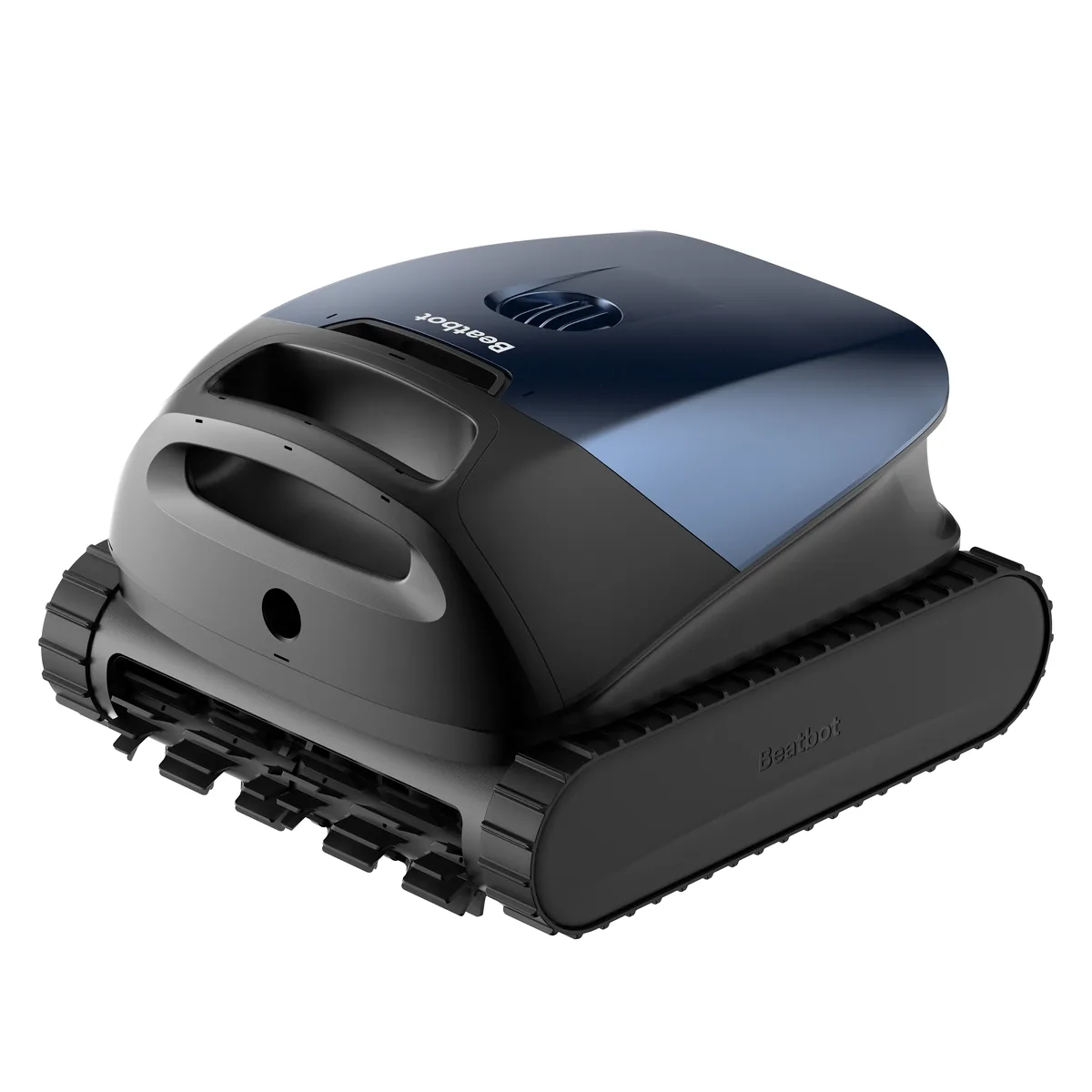
Cordless floor+wall+waterline · 240 min, floor + walls
Cleans: Floor, walls, waterline
Cordless floor+wall+waterline · 150 min, floor only
Cleans: Floor, walls, waterline
Corded if the pool is large or you want the robot to run on a schedule for years without a battery to replace; cordless if the cable is the thing you hate. A corded robot never runs out mid-cycle and has no battery to wear out, but its cable twists over time. A cordless one has no cable to tangle, but its runtime is the hard limit on what it can clean, and its battery loses capacity every season.
There is no single number, because what ends a robot's life is usually one part: a pump motor seal, a power supply, a battery, or a cable that has twisted beyond use. Brushes and drive belts wear out on a schedule and are cheap to replace. The warranty is the only lifespan figure a maker commits to, and here it runs from one year to three; 4 robots publish no term at all.
Every specification explained, with the numbers from the catalog behind each one.