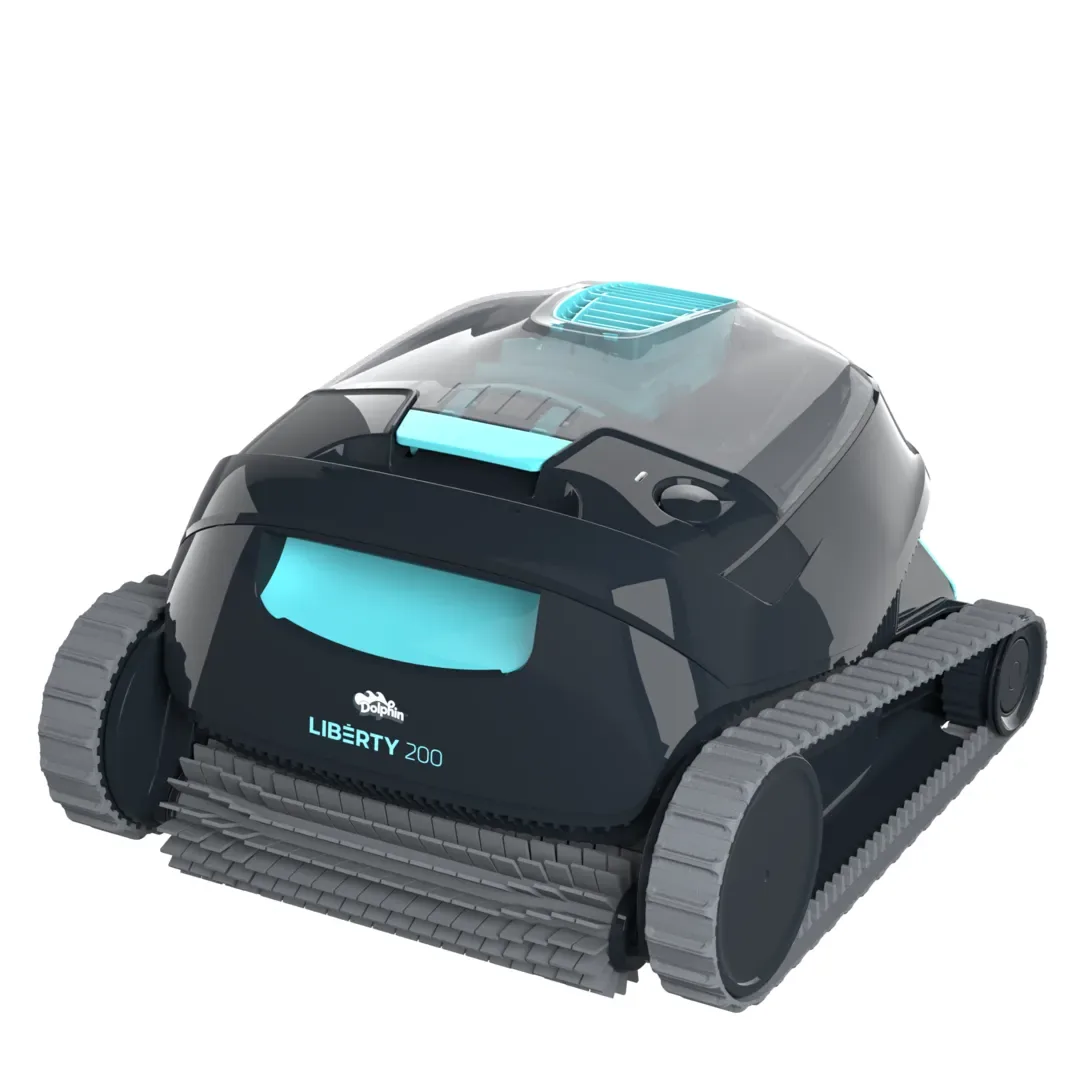
Dolphin~$949
Dolphin Liberty 200
Cordless floor+wall · 150 min, floor + walls
- Pool fit
- ~49 ft
- Filtration
- No micron figure published
- Retrieval
- You fish out 17.9 lb
- Cordless
- 33 ft
- 2-year warranty
Cleans: Floor, walls
Short answer
Yes, provided the maker lists vinyl. A robot has no hard wheels dragging on the liner the way some suction cleaners do, and most use rubber, PVC or foam brushes that are soft on vinyl. The things that damage liners are grit trapped under a brush, robots climbing onto vinyl-covered steps, and wrinkles that a robot catches on — none of which is specific to one brand.
The maker's surface list first: a robot that names vinyl has been designed and warranted for it. Then the brushes. Soft PVC or rubber rollers suit vinyl; aggressive bristle brushes are meant for plaster and pebble finishes. Some makers sell alternative brushes for each surface.
Weight matters less than people expect on a liner, because the robot's weight in water is a fraction of its weight on the deck. Traction matters more: a robot that slips on a smooth liner spends its runtime spinning rather than cleaning.
Converting a vinyl pool to a salt chlorine generator is a common upgrade, and it changes nothing about the liner advice. It does change the robot advice slightly: salt is harder on metal fasteners, swivels and charging contacts, so a robot whose maker lists a salt rating — and rinsing it in fresh water now and then — is the safer buy. The salt-pool explainer below goes further.
27 robots here are rated for above-ground pools. Most above-ground pools have flat floors and no deep end, which is why the cheapest robots are flat-floor designs built for them, and why a robot rated for "slopes under 15°" is fine in an above-ground pool and wrong for an in-ground deep end.
Cordless floor+wall · 150 min, floor + walls
Cleans: Floor, walls
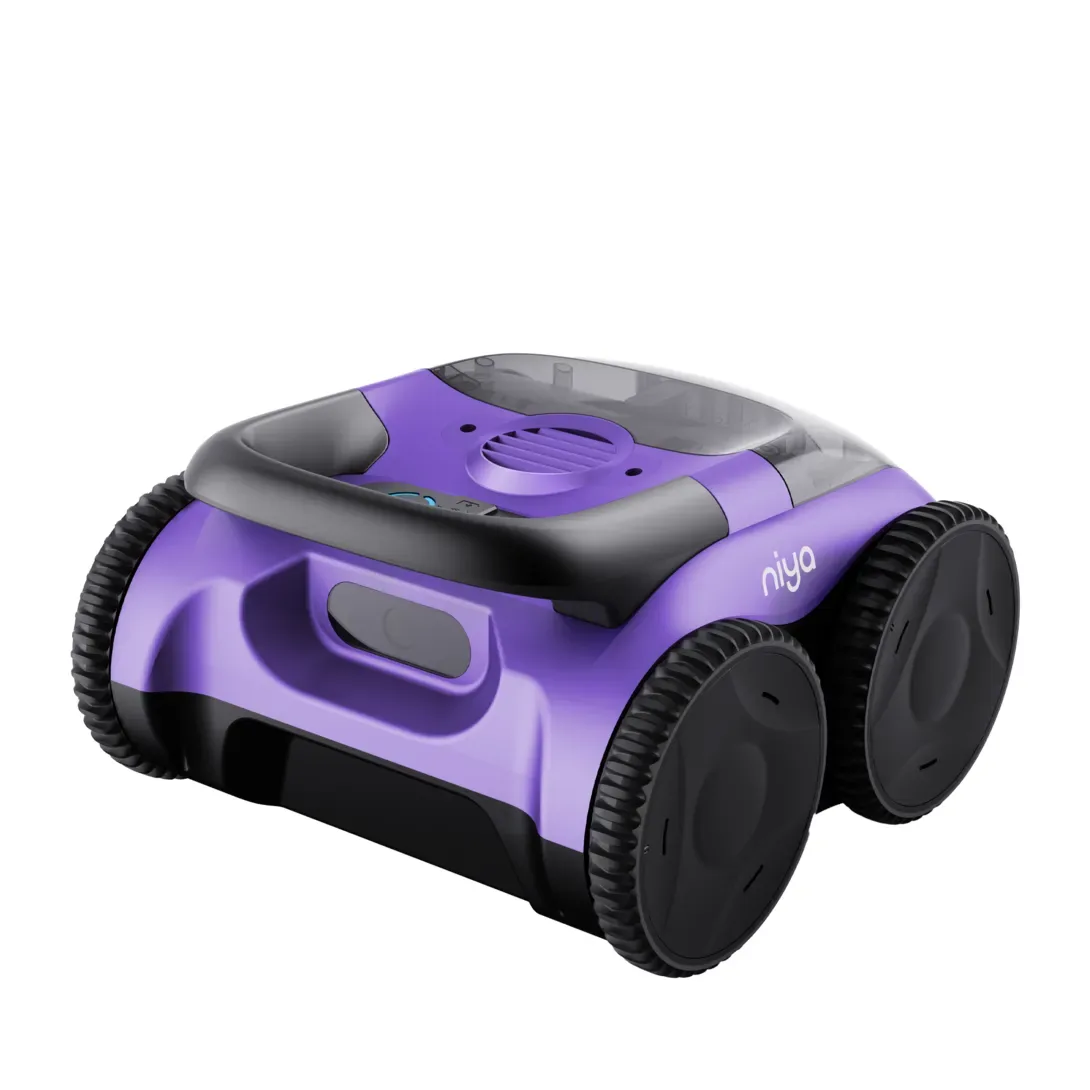
Above-ground · 90 min, floor only
Cleans: Floor
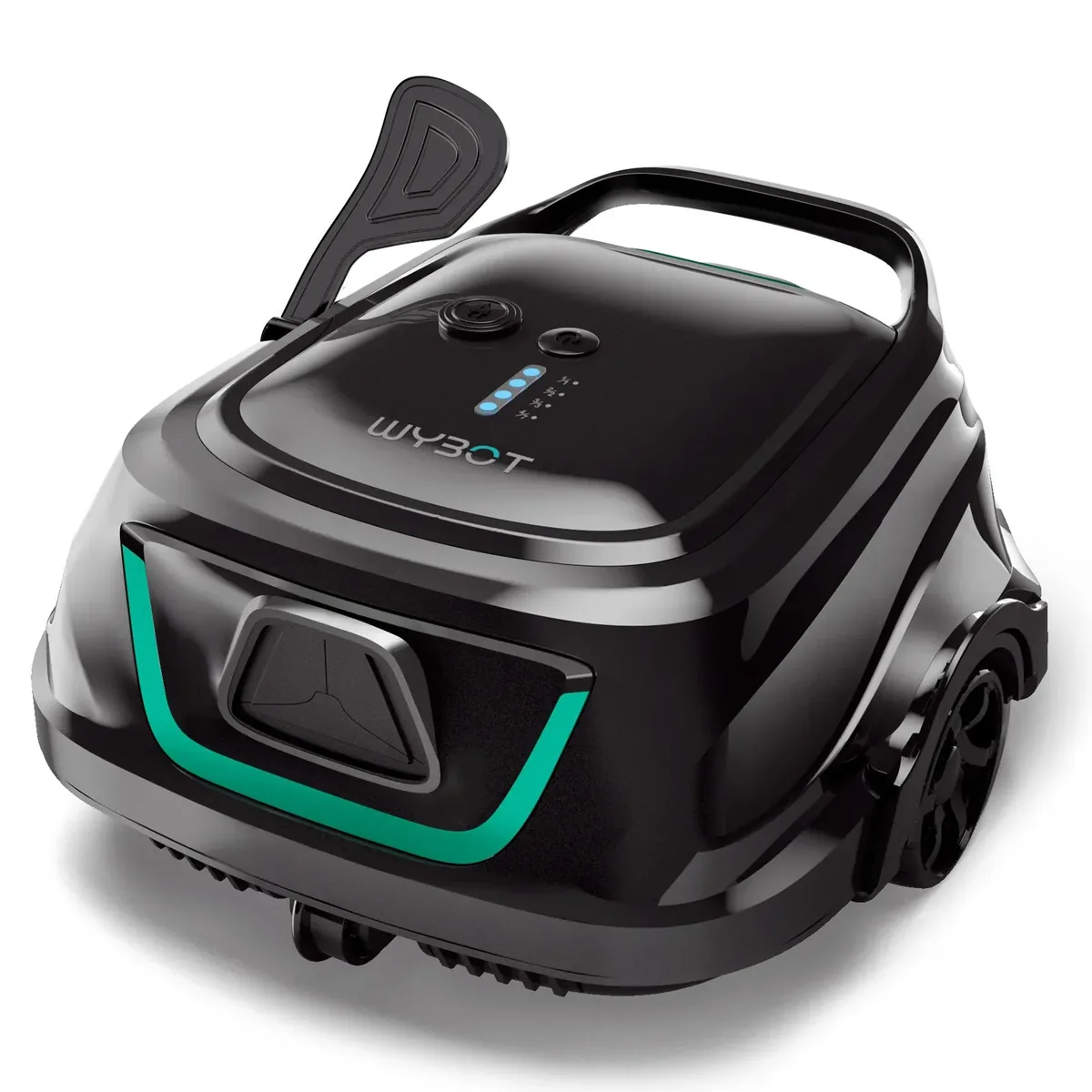
Cordless floor-only · 120 min, floor only
Cleans: Floor
Yes. A salt pool runs at roughly a tenth of seawater's salinity, and robotic cleaners are built to work in it. What salt is hard on is anything metal and anything left wet: swivel bearings, fasteners and battery charging contacts. Take the robot out between cycles, rinse it in fresh water now and then, and store it out of direct sun.
A robot is the only one of the three that works independently of your pool's pump and filter: it has its own motor, its own filter and its own power supply, so it catches debris on board instead of sending it to the skimmer basket and filter. Suction-side cleaners are the cheapest to buy and use the pump's suction; pressure-side cleaners use the pump's return flow, often with a booster pump, and carry a bag. If the pool filter is small or the pump is old, a robot takes load off both.
Every specification explained, with the numbers from the catalog behind each one.